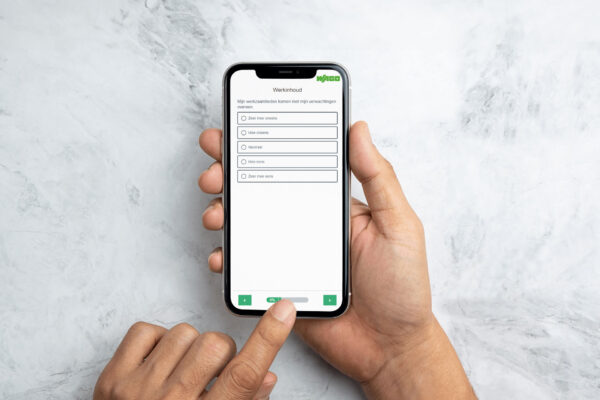
A customer satisfaction survey (KTO) is a tool used to measure how happy customers are with a company's products, services, or overall experience. It's indispensable because it provides valuable insights into what customers like and dislike, helping businesses identify areas for improvement, build stronger customer relationships, and ultimately drive loyalty and growth.
A customer satisfaction survey (CSS) is a structured method for gaining insight into how customers perceive your products, services, and overall service. It provides you with direct insight into satisfaction levels, bottlenecks in the customer journey, and expectations for the future.
In a changing market, operating on assumptions is a risk; successful decision-making requires objective data. By consistently measuring customer satisfaction, you gain a reliable and up-to-date picture of your performance. This not only exposes hidden bottlenecks in the customer journey but, more importantly, collects substantiated insights to specifically optimise your service.
The added value of KTO
To truly drive growth, your customers' experience cannot be a blind spot. Research consistently demonstrates why measuring customer satisfaction is not a nice-to-have, but a strategic necessity:
- Increased profitability Customer-centric organisations that actively steer on customer data are up to 60% more profitable than organisations that do not (Deloitte).
- Customer retention An increase in customer retention of just 5% can lead to a profit increase of 25% to as much as 95% (Bain & Company).
- Lower acquisition costs Acquiring a new customer is 5 to 25 times more expensive than retaining an existing one. A solid customer retention strategy helps to reduce customer churn (churnproactively reduce (Harvard Business Review).
The 4 main advantages of a KTO in a row
- Direct insight into needs and bottlenecks: Understand exactly what your customers expect and discover immediately where the friction lies in your current processes.
- Concrete suggestions for improvement: You won't receive abstract and dusty reports, but will quickly discover what can be improved, so you can focus on the highest priority matters.
- Growth in loyalty and ambassadors: Customers who feel heard and taken seriously are more loyal and recommend you more readily to others (a higher Net Promoter Score).
- Strengthened competitive position Stay ahead of market trends and use current insights to gain a measurable advantage over competitors.
What does a successful customer satisfaction survey cost?
Curious about the cost for your organisation? Calculate within 1 minute easily tailor your indication.
Calculate directlyHow does a KTO work at NetProve?
We favour an approach that is efficient, accessible for the person filling it out, and delivers directly usable results for your organisation. Our method consists of four clear steps:
- Determining goals and themes Together, we will decide which pillars we will measure. Do you want to focus on communication, product quality, or delivery times? Based on your goals, we will tailor the KTO.
- Slim dataverzameling We invite your customers via user-friendly, online surveys. This can be done via email, a physical completion location (provided by NetProve), and QR codes, for example. The questionnaires are to-the-point, visually appealing, and the timing is carefully considered, ensuring maximum response.
- Real-time answers Receive the most up-to-date feedback instantly. Via our clear dashboard, you can easily analyse trends and sentiments, without having to wait weeks for the data analysis.
- Make an impact with results Gather valuable input and translate with NetProve AI From data to practice. You'll receive concrete improvement suggestions that your team can immediately start using to optimise service provision.
What questions do you ask in an effective KTO?
A good customer satisfaction survey stands or falls with the right question formulation. You want to avoid leading questions and focus on actionable answers. Although we always tailor the questionnaire specifically to your organisation, here are some strong and commonly used CSM survey questions:
- For the overall experience: “The product quality meets my expectations. (Likert scale strongly disagree to strongly agree)
- For process optimisation “My regular point of contact is reachable when I have questions or problems.” (Likert scale: strongly disagree to strongly agree)
- For loyalty (NPS method): “How likely is it that you would recommend [company/product/service] to family, friends or colleagues? (Scale very unlikely to very likely)
- For open feedback: “How can we improve service quality?”
Want to know more about the possibilities for your organisation?
Learn more about our customer satisfaction survey and book directly via the button below non-binding introductory conversation of +/- 30 minutes in with us.
Schedule an online demo right awayShould the KTO be carried out internally or outsourced?
When conducting a KTO, there is a choice between in-house management or engaging a specialist. Outsourcing the investigation to an independent party generally offers three significant, structural advantages:
- Objectivity Customers give more honest and transparent feedback to an external party. They dare to be more critical, which yields much safer and more valuable data for you.
- Higher response We know from experience exactly how to phrase invitations and questionnaires to prevent drop-outs and increase conversion.
- Time-saving and direct insight: No more hours spent toiling away in Excel or typing up complicated reports. We'll automate data collection, and you'll get immediate access to an up-to-date dashboard full of concrete insights.
Frequently Asked Questions about Customer Satisfaction Surveys (FAQ)
How long does it take to set up a KTO? It's faster than you think. Because we work with efficient, proven step-by-step plans and templates, a survey can often be live within a week. From that point on, the data comes in in real-time.
Is the privacy of our customers guaranteed? NetProve operates fully in accordance with current GDPR legislation. Research data is processed securely and we always conclude a clear data processing agreement (DPA).
What is the ideal frequency for a KTO? This depends on the type of organisation. An annual large customer satisfaction survey provides an excellent strategic overview, but many organisations opt for a continuous measurement process (for example, a short questionnaire after each completed project or touchpoint) so that they can make real-time adjustments throughout the year.
Schedule an appointment
Wondering how at your organisation, thanks to smart customer satisfaction survey, can grow the number of ambassadors? Discover the possibilities during a demo call.
During this introduction, we will take you through about 30 minutes into our unique research methodology. Fill in the form below and then schedule an immediate (online) non-binding introductory conversation in with us.
"*" geeft vereiste velden aan
Sources & References
Deloitte: Research into profitability through customer focus
Bain & Company The impact of customer retention on profit margins
McKinsey & Company The impact and ROI of an optimal customer experience (The CEO guide to customer experience)
PwC Research into brand loyalty and customer experience
Harvard Business Review: The value and cost of customer retention
Services
Discover our other research & associated services with which we help organisations grow.